Materials, making, and the life of a blanket
Coyuchi’s Circular Cotton: Understanding Recycled Fibers in Home Textiles
A blanket can begin its second life without looking like a lesson in recycling. In Coyuchi’s Full Circle collection, recycled cotton is combined with organically grown cotton, then woven and brushed into a substantial home textile. The example invites a closer look at what recycled content means, what a finish can tell us, and why care instructions belong in any serious conversation about sustainability.
There is a particular dignity to an old cotton garment. It has been washed, worn, softened, perhaps mended; it has acquired the quiet patina that new things are often asked to imitate. When its first use is over, the material need not be finished. It may be collected, sorted, processed, and made into yarn again. The transformation is neither magical nor without consequence, but it offers a practical answer to a question the textile industry has spent a long time postponing: what happens to a fiber after the object made from it is no longer wanted?
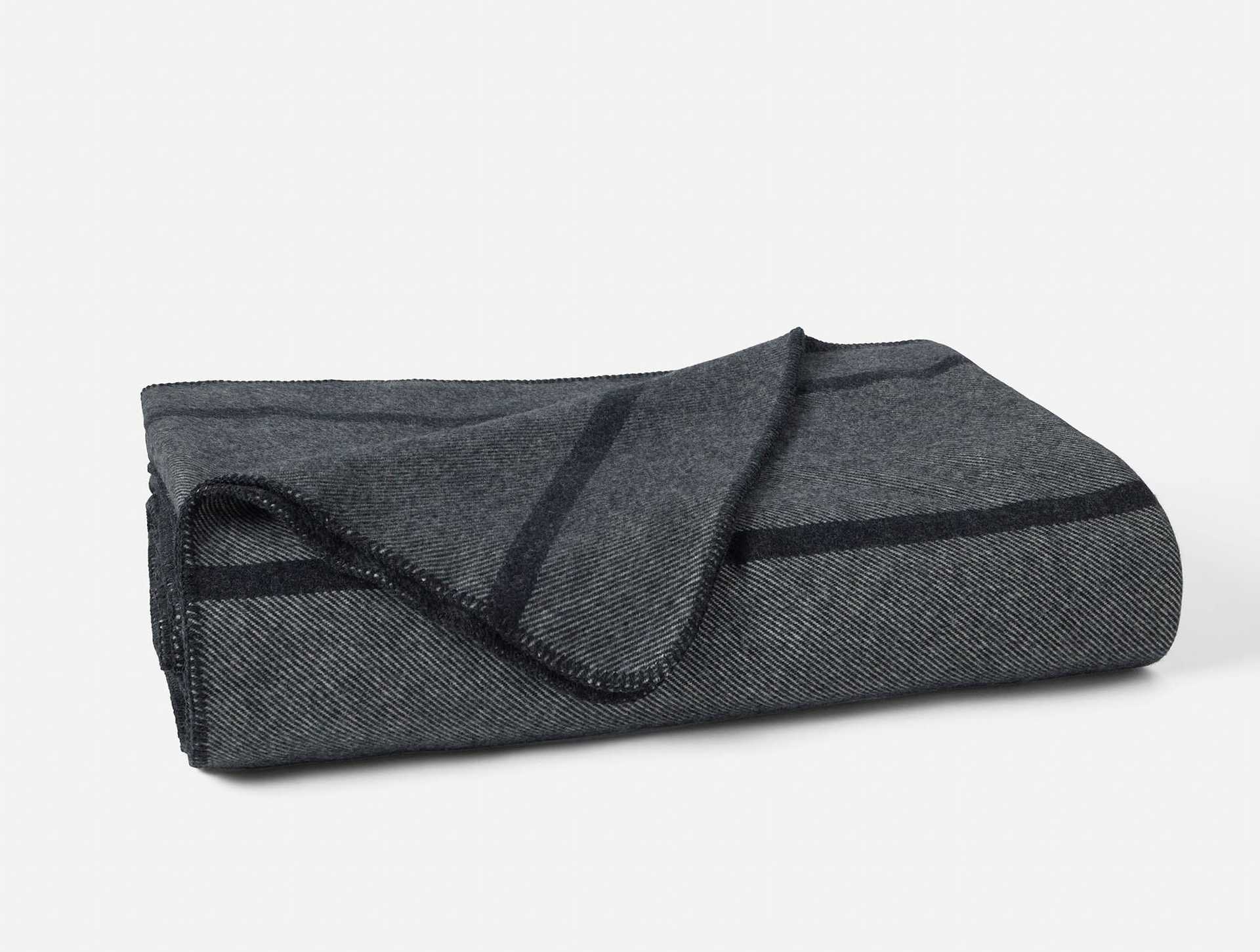
Coyuchi’s Full Circle collection offers a useful example for considering that question in the setting of the home. Its blanket is described as a blend of 52 percent recycled cotton and 48 percent organically grown cotton, woven in Germany and finished with brushing. The recycled cotton comes through the brand’s 2nd Home program, while the product information identifies the recycled content as certified under the Global Recycled Standard, or GRS. These details are a starting point, not a complete environmental verdict. They make it possible to ask more precise questions about material, manufacture, use, and eventual reuse.
“Circular” is an appealing word, with its suggestion of a tidy loop in which nothing is wasted. In textiles, as in most industries, the reality is less geometrical. Fibers may be recovered and used again, but collecting, sorting, cleaning, processing, spinning, dyeing, and shipping all require resources. A recycled-content label tells us something important about a product’s materials; it does not, by itself, describe every part of its footprint. The value of the word lies not in promising perfection, but in pointing toward a less disposable way of making and buying.
What recycled cotton actually means
Recycled cotton is cotton recovered from material that has already been made or used. That material can include pre-consumer textile waste, such as scraps left over during manufacturing, or post-consumer goods, such as clothing and household textiles that have reached the end of their first useful life. The distinction matters. A product’s description may identify a recycling program or percentage without spelling out every source stream, so readers should look for the manufacturer’s explanation and any relevant certification.
Once collected, cotton cannot simply be returned to a bale in its original state. Textiles must be sorted, and unwanted components may need to be removed. Depending on the process, the material is mechanically or otherwise processed into fibers that can be spun into yarn. Reclaiming a textile can be more complicated than using new fiber: the feedstock may vary in color, composition, and condition. Buttons, zippers, labels, finishes, and blends can all affect what can be recovered and how it can be used.
Mechanical recycling, in particular, can shorten cotton fibers as the material is opened and broken down. Shorter fibers may be harder to spin into a strong, smooth yarn on their own. A blend with new cotton can help achieve useful yarn characteristics, depending on the intended construction. This is one reason a mixed-fiber product should not be treated as a compromise by definition. It may be a considered way to incorporate reclaimed material while making a textile suited to regular household use.
For the Full Circle blanket, the stated 52/48 blend means recycled cotton makes up a little more than half the fiber composition, with organically grown cotton making up the rest. That percentage is more informative than a vague claim of being “eco-friendly”: it tells the reader how much of the listed fiber is recycled. It does not reveal, on its own, the exact origin of every recovered fiber, the energy used in processing, or how the blanket will perform after years of washing. Those questions require separate evidence.
Why combine recycled and organic cotton?
The blend brings together two different material stories. Recycled cotton gives existing fiber another use; organically grown cotton is cultivated under an agricultural standard that restricts certain inputs and sets requirements for certified production. These are distinct claims, and it is useful not to collapse them into a single halo of virtue. “Recycled” concerns the previous life of the material. “Organic” concerns how the cotton was grown and, depending on the certification and chain of custody, how it was handled through later stages.
In a practical sense, blending may also help a textile meet requirements for hand, structure, and durability. A blanket must do more than carry an admirable composition. It has to drape over a bed, keep its shape, tolerate ordinary use, and feel agreeable against skin. New cotton may contribute fibers with characteristics that support spinning and construction, while recovered cotton reduces the need for all of the cotton in the yarn to come from a new crop. The precise role of each fiber depends on the mill’s process and the finished design.
It is tempting to assume that an all-recycled product is always the more responsible choice. The material percentage matters, but so do longevity and use. A textile that is kept for years may serve better than one that is discarded early, even if its initial composition sounds more compelling. The relevant comparison is not a slogan against a slogan. It is a set of questions: What is the product made from? How durable is it? How is it cared for? Can its materials be recovered again? And what is known, rather than merely implied, about its production?
The character of recycled yarn
Recycled fibers can leave visible evidence of their mixed past. Coyuchi describes natural color variations from recycled yarn in the Full Circle blanket. Such variation may appear as subtle shifts across the fabric rather than as a perfectly uniform field. It is not necessarily a flaw or a sign that the material has been carelessly made. It can be a consequence of working with recovered fibers whose shades differ, particularly when the yarn is not made uniform through extensive bleaching or dyeing.
That irregularity changes the aesthetic terms. A new textile often presents itself as a controlled surface: color and texture are expected to repeat with near-industrial obedience. A recycled yarn may be less exact. The small variations can give a blanket visual depth, like a wall whose plaster retains the trace of the hand that smoothed it. The effect depends on the fiber stream, sorting, dyeing, and construction; not every recycled textile will show it, and variation should not be mistaken for proof of recycled content. Documentation is stronger evidence than appearance.
The Full Circle blanket is also described as brushed. Brushing is a finishing process that raises or softens fibers at the fabric surface, producing a fuzzier, warmer hand. It may make a woven blanket feel more inviting and lend the yarns a softened appearance. It can also affect how the textile behaves: raised fibers may release some lint, particularly at first, and the surface may change with repeated abrasion or laundering. The finish is an aspect of comfort and appearance, not a certification or a measure of sustainability.
A brushed finish can make a textile feel more substantial without changing the underlying fiber blend. For that reason, it is useful to keep composition and sensation separate in one’s mind. A blanket may feel soft because of its fibers, its weave, its finishing, or all three. The hand is real and important, but it does not tell the whole story of the material.
Reading a recycled-content certification
The Global Recycled Standard is a voluntary certification framework intended to verify recycled material and support traceability through the supply chain, alongside certain environmental and social requirements for certified processing. A GRS claim can offer more assurance than an unsubstantiated statement on a hangtag, particularly when the certification applies to the product and its chain of custody. Still, the scope of a certification matters. It is worth checking which entity or product is certified, what percentage is covered, and whether the claim concerns recycled content specifically or another feature of production.
Certifications are not interchangeable. A label for recycled content does not automatically establish that a product is organic, fair trade, carbon neutral, locally made, or free of every chemical a consumer might wish to avoid. Similarly, organic cotton certification does not certify the recycled portion of a blended textile. Clear product information separates these claims rather than asking one badge to stand in for every kind of responsibility.
For a consumer, the most useful habit is to treat certifications as evidence with a defined boundary. Read the stated material percentages, note the named standard, and consult the certifier’s current explanation if the distinction matters to you. Look for information about where the fiber comes from, where the fabric is woven, and how it is finished. A precise description of the product’s limits is often more trustworthy than a broad promise of harmlessness.
Care is part of the material story
The Full Circle blanket is described as machine washable, with cold washing recommended and tumble drying on low. These directions are not incidental housekeeping. They are part of the object’s design: a blanket that can be cleaned at home may be easier to keep in regular use than one requiring special handling. The actual care label on the item should always take precedence, since production details and instructions can change.
Cold water and a gentle cycle can help reduce the stress of laundering, while washing only when needed limits wear and saves water and energy. A mild detergent is generally a sensible choice for cotton textiles; bleach and fabric softener should be avoided unless the care label explicitly permits them. Fabric softener can leave residues that change a textile’s feel and absorbency. Overloading a washer can prevent good rinsing and place unnecessary strain on seams and fibers.
Low-heat drying is a useful middle ground when a blanket is designed for machine drying, but air-drying can reduce heat exposure further. The blanket should be dried thoroughly before storage. Damp fabric put away in a closed space can develop odors or mildew, an outcome that shortens useful life rather than extending it. If using a dryer, removing the blanket promptly can help limit creasing and excess heat exposure.
Brushed surfaces may require a little patience. Some initial lint can be normal for a fabric with a raised finish, though heavy shedding, sudden thinning, or damage merits attention. Avoid aggressive brushing or high-heat treatment unless the maker recommends it. A blanket is not a fragile museum textile, but neither is it improved by treating every laundry cycle as a test of endurance.
A more careful comparison of home textiles
When comparing recycled cotton blankets, begin with the fiber percentages. “Made with recycled cotton” could describe a small share or most of the composition; a clear figure makes the difference visible. Then examine the kind of recovered material, any certification, and the locations associated with fiber sourcing and weaving. Country-of-origin information is useful, though it does not by itself explain environmental impact. A product made in one place is not automatically better or worse than one made elsewhere.
Next, consider the textile itself. Is it woven or knitted? Does its weight suit the way you intend to use it? Is the surface brushed, textured, or smooth? Are the edges finished in a way likely to withstand ordinary handling? These are not merely decorative questions. Construction and finish help determine whether a blanket becomes a daily layer, a seasonal bedcover, or an object used so rarely that its material advantages remain largely theoretical.
Finally, compare care requirements with your household’s habits. A washable blanket that fits in your machine may be more practical than a more elaborate piece that requires specialized cleaning. Conversely, a large or thick textile may need a commercial machine even when it is technically washable. Convenience affects use, and use affects longevity. The best choice is not the one with the most impressive language; it is the one whose materials, construction, and maintenance make sense for the home in which it will live.
Recycled cotton is not a single, uniform category. Fiber length, sorting, blending, dyeing, spinning, weaving, and finishing all shape the result. Two products can share the same recycled percentage and feel entirely different. The label helps identify what is in the textile. It cannot substitute for paying attention to how the textile is made and whether it performs well over time.
The limits—and promise—of circular cotton
There is no material loop without friction. Cotton fibers degrade as they are processed and used; blends can be difficult to separate; dyes and finishes complicate recycling; and collection systems do not capture every unwanted garment or household textile. A recycled blanket may itself eventually become difficult to recycle, especially if it contains mixed fibers or treatments that are not readily recoverable. “Circular” should therefore be understood as an ambition and a direction of travel, not a guarantee that an object will circulate forever.
That qualification does not diminish the value of reuse. Making a new textile from recovered material can reduce dependence on virgin fiber and give discarded or surplus cotton another function. The gains depend on the particular supply chain and the textile’s useful life. A durable blanket that is repaired, cared for, and kept in service represents a more complete version of circularity than a product bought for its claim and quickly replaced.
For readers trying to make a thoughtful choice, the Full Circle example is instructive precisely because its description gives several concrete points to examine: 52 percent recycled cotton, 48 percent organic cotton, a brushed finish, German weaving, GRS certification, and machine-wash care. Each detail answers a different question. Together they sketch a product more clearly than a general assertion that it is “sustainable,” while leaving room for further inquiry into the parts that a product listing cannot settle.
The quiet test of a blanket
A blanket lives close to the ordinary. It is folded at the foot of a bed, pulled over a sofa, carried from one room to another, and washed when its use becomes visible. Its virtues are discovered in repetitions: whether the edge holds, whether the surface remains pleasant, whether the weight suits a cool evening, whether care is simple enough that the blanket continues to be used.
Recycled cotton asks us to notice the history in that ordinary object. The fiber has not arrived as an abstraction but as material with a previous life, returned to service through sorting and manufacture. Organic cotton contributes another kind of information about the crop. Brushing shapes the feel; weaving gives the material structure; care determines how it fares in a household. None of these facts guarantees perfection. Together, they allow a more intelligent purchase than a label alone ever could.
The circular promise, then, is less a perfect circle than a habit of attention: use what already exists where it can serve well, ask what claims mean, choose for durability, and care for the thing after bringing it home. In that sense, a recycled-cotton blanket is not merely a soft layer. It is also a small, tangible argument against the assumption that textiles must have only one life.